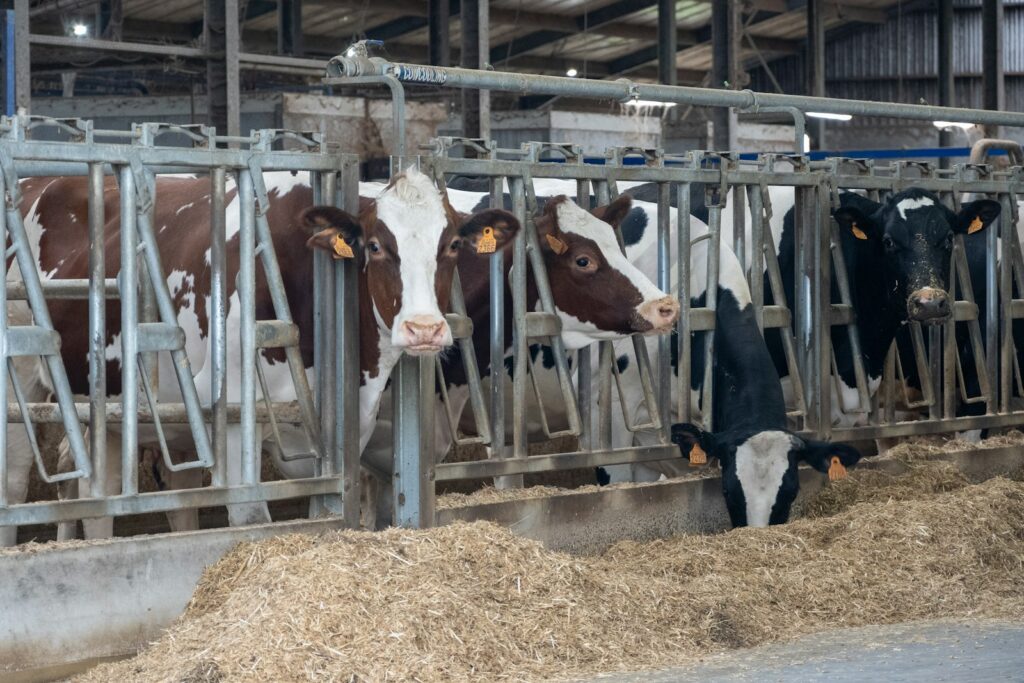
The fastest way to raise milk yield is to get more good feed and water into the animal every day. A lactating cow or goat needs a dairy feed for cows and goats with around 16 to 18% crude protein, plenty of quality forage, unlimited clean water and feed spread over several meals. Fix intake first. Most low yields come from an animal that simply isn’t eating or drinking enough.
This guide is for UAE dairy owners, from a family ezba with a few goats to a farm milking dozens of cows. It covers how much to feed, what the ration should contain and how heat changes things in Al Ain and across the country.
Quick answer: Feed lactating cows and goats a balanced ration of good forage plus a dairy concentrate of about 16 to 18% protein, matched to how much milk each animal gives. Keep water clean, cool and always available, feed in cooler hours during summer, and change rations slowly over one to two weeks.
Why intake decides milk yield
Milk is made from what the animal eats and drinks. Around 87% of milk is water, and the rest (fat, protein, lactose and minerals) comes straight from the ration. If dry matter intake drops, milk follows within days.
A rough guide for dry matter intake:
- Lactating dairy cows eat about 3 to 4% of body weight in dry matter a day. A 550 kg cow in good production may eat 18 to 24 kg of dry matter.
- Dairy goats eat about 3.5 to 5% of body weight in dry matter, so a 60 kg doe may eat 2 to 3 kg.
- High producers sit at the top of these ranges.
Anything that cuts intake cuts milk: stale or mouldy feed, empty troughs, too few feeding spaces, heat, lameness, or sudden ration changes. Change any ration over 7 to 14 days, and use bagged feed within six months of manufacture (see our guide on how to store animal feed). Health matters too: mastitis, lameness and parasites cut yield, and no feed can make up for them.
What a good dairy ration contains
A dairy ration has two parts: forage for the rumen and concentrate for the extra energy and protein that milk needs. Neither works well alone.
| Part of ration | Typical share of dry matter | Main job | UAE examples |
|---|---|---|---|
| Forage (hay, green fodder) | 40 to 60% | Keeps the rumen working, supports butterfat | Rhodes grass hay, alfalfa hay, alfalfa pellets |
| Concentrate (dairy pellets, grain mix) | 40 to 60% | Energy and protein for milk | Dairy feed pellets, flaked barley, flaked corn |
| Minerals and salt | Small amount, free choice or in feed | Calcium, phosphorus, trace minerals | Mineral blocks, fortified pellets |
| Water | Unlimited | Milk volume and cooling | Clean, shaded troughs |
For lactating cows, the whole ration usually lands around 15 to 18% crude protein on a dry matter basis, with higher figures for high yielders in early lactation. Goats are similar. Rhodes grass hay is often only 6 to 10% protein, so herds fed mostly Rhodes grass need a stronger concentrate or some alfalfa.
Our Dairy Feed Pellets carry a minimum 18% protein and are made for dairy cattle and goats. They are fortified with vitamins and minerals, which saves you mixing a separate premix for the concentrate part of the ration.
Our guide to protein percentage in animal feed explains these numbers.
How much dairy feed for cows and goats per day
The most common rule of thumb is to feed concentrate in line with milk output, on top of a forage base that covers maintenance. Many farms start with about 1 kg of dairy concentrate for every 2 to 3 litres of milk a cow produces, then adjust by body condition and yield. Goats follow the same logic on a smaller scale, often around 0.3 to 0.5 kg of concentrate per litre for good milkers.
| Animal | Daily milk | Concentrate guide (kg/day) | Forage |
|---|---|---|---|
| Cow, low yield | 10 to 15 litres | 4 to 6 | Free access to good hay |
| Cow, medium yield | 15 to 25 litres | 6 to 9 | Free access, best quality hay |
| Cow, high yield | 25 litres plus | 9 to 12, split into 3 or more meals | Best quality hay, some alfalfa |
| Dairy goat | 1 to 2 litres | 0.4 to 0.8 | Free access to hay |
| Dairy goat, high yield | 2 to 4 litres | 0.8 to 1.5, split into 2 or 3 meals | Free access, some alfalfa |
These are starting points only. Breed, body weight, stage of lactation and forage quality all shift the numbers. For a herd of any size, it’s worth asking a vet or nutritionist to balance the ration against your actual hay.
Two rules matter more than the exact figure. Don’t give more than about 3 to 4 kg of concentrate to a cow in one meal, or around 0.5 kg to a goat. Big grain meals drop rumen pH and can cause acidosis. And keep forage on offer at all times so the rumen always has fibre to work with.
Water: the cheapest way to more milk
A cow needs roughly 4 to 5 litres of water for every litre of milk she gives, on top of what she needs for herself. A cow giving 25 litres can drink 100 litres or more on a mild day, and much more in a UAE summer. Goats drink less in total but follow the same pattern.
- Give at least two water points per group so a dominant animal can’t block the trough.
- Shade the troughs. Water sitting in full sun can get hot enough that animals drink less.
- Clean troughs often, and check that flow keeps up after milking and feeding, when cows drink most.
Feeding dairy animals in UAE heat
Heat is the biggest single drag on milk yield in the Gulf. Once daytime temperatures pass 40°C, most dairy animals eat less, ruminate less and give less milk, and drops of 10 to 25% are common in poorly managed summer herds.
What helps:
- Feed most of the ration in the early morning and evening, when animals are more willing to eat.
- Offer fresh feed twice or more a day rather than one large load that heats and goes stale in the trough.
- Raise the nutrient density of the ration so each mouthful carries more energy and protein, without cutting fibre below safe levels.
- Use fans, sprinklers or misters in the shade where possible.
Our full guide to heat stress in livestock covers summer feeding in more detail.
Stage of lactation changes the ration
Milk yield climbs after calving or kidding, peaks at around six to eight weeks, then slowly falls. Feeding should follow that curve.
- Late pregnancy (dry period): Mostly forage with a modest amount of concentrate in the last two to three weeks, so the rumen adjusts before calving. Don’t let dry cows get fat.
- Early lactation: The hardest stage. Raise concentrate gradually over two to three weeks, keep forage quality high and watch body condition. Animals here often lose weight even on good feed.
- Peak and mid lactation: Feed to yield. This is where good feeding pays most, because every extra litre at peak adds many litres across the lactation.
- Late lactation: Reduce concentrate as yield falls and let condition recover.
Young stock are the future milking herd. If you rear your own replacements, our calf starter feed guide covers the first months, and Calf Starter is made for that stage.
Forage quality: where many UAE herds lose milk
Stemmy, sun bleached or dusty hay is lower in protein and harder to digest, so animals eat less of it and make less milk. To lift forage quality:
- Buy hay that is green, leafy and smells sweet. Avoid mouldy or very dusty bales.
- Mix some alfalfa into a Rhodes grass based diet. Alfalfa typically carries 15 to 20% protein and plenty of calcium, which dairy animals need.
- Consider Alfalfa Pellets (16% protein, 25 kg bags) if storage space or hay waste is a problem.
Our comparison of alfalfa pellets vs hay explains when each one makes sense.
Frequently asked questions
What protein level should dairy feed for cows have?
The concentrate part of a dairy cow’s ration is usually 16 to 20% crude protein, depending on how much protein the forage supplies. The whole diet for a lactating cow typically ends up around 15 to 18% protein on a dry matter basis. Herds on low protein grass hay need a stronger concentrate or added alfalfa. A nutritionist can balance it against your actual hay.
How quickly will milk yield rise after changing feed?
If the old ration was short of energy or protein, you may see a lift within one to two weeks once animals have adjusted. Always change feed gradually over 7 to 14 days to avoid upsetting the rumen. If yield doesn’t move, look at water, heat, health and forage quality, because the problem may not be the concentrate at all.
Can I feed the same dairy feed to cows and goats?
Yes, many dairy concentrates are suitable for both, and our Dairy Feed Pellets are made for dairy cattle and goats. Amounts differ a lot, since a goat eats a fraction of what a cow eats. Read the feeding guide on the bag, split the daily amount into several meals and always provide hay alongside.
Does more grain always mean more milk?
No. Extra grain helps only up to the point where the rumen can cope. Beyond that, rumen pH falls, fibre digestion slows, butterfat drops and animals risk acidosis and lameness. Most rations keep forage at 40% of dry matter or more. Feeding a balanced dairy concentrate in split meals is safer than piling on straight grain.
How much water does a milking goat need?
A milking goat may drink anywhere from 4 to 12 litres a day or more, depending on her size, yield and the weather. In a UAE summer, intake can easily double. Keep water clean, cool and shaded, with enough trough space that timid goats can drink without being pushed away. Low water intake shows up as lower milk within a day or two.