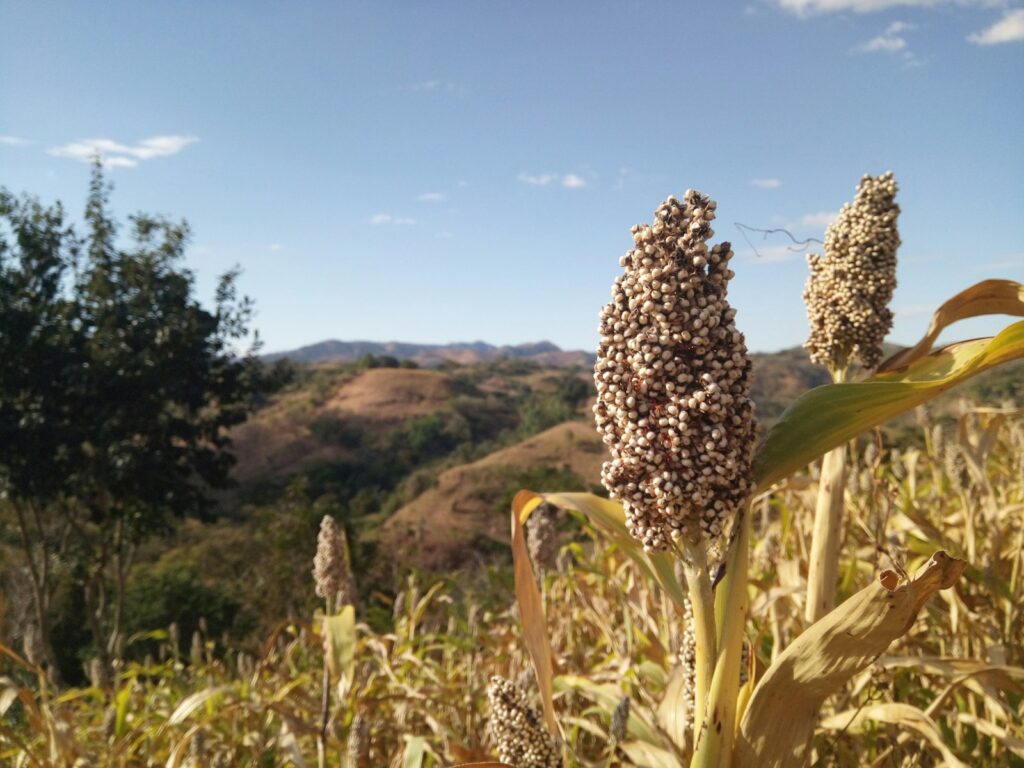
White sorghum is a good energy grain for livestock. As sorghum animal feed, it carries roughly 9 to 11% protein and close to the energy of maize, and white varieties are generally low in tannins, so animals eat them well. It suits camels, sheep, goats and cattle, as long as it is introduced slowly, fed with enough forage and cracked or rolled for cattle.
In Sudan, sorghum (known locally as dura) is a staple food and a traditional camel feed, and plenty of it now travels to the Gulf. This guide explains how sorghum compares with other grains, how to prepare it and how much each type of animal can safely eat.
Quick answer: White sorghum is an energy grain with about 9 to 11% protein and around 90 to 95% of maize’s feeding value. Feed it whole to sheep, goats and camels, cracked or rolled to cattle, always with forage, and build up slowly over two to three weeks to avoid acidosis.
What is white sorghum?
Sorghum is a cereal grown widely in hot, dry regions of Africa and Asia because it copes with heat and low rainfall better than maize. The grain comes in several colours. White and cream types are the ones used most for food and are usually low in tannins. Red and brown types often carry more tannins, which make the grain bitter and reduce protein digestibility.
For livestock owners that difference matters. Low-tannin white sorghum behaves much like maize in a ration. High-tannin types can lower intake and growth unless they are processed or limited.
Long Reach Trading imports whole-grain White Sorghum from Sudan through our Dubai office.
Sorghum vs barley, maize and wheat bran
Sorghum is a starch grain. Its job in a ration is energy, with some protein on the side. The table below gives general ranges from mainstream feed tables, as fed. Real values change with variety, growing conditions and moisture.
| Ingredient | Crude protein (%) | Energy compared with maize | Notes |
|---|---|---|---|
| White sorghum | 9 to 11 | About 90 to 95% | Hard grain, low tannin in white types |
| Barley | 10 to 12 | About 85 to 90% | More fibre, ferments fast in the rumen |
| Maize (corn) | 7 to 9 | Reference (100%) | High starch, slower rumen fermentation |
| Wheat bran | 12 to 15 | About 70 to 75% | High fibre and phosphorus, low starch |
In practice, white sorghum can replace much or all of the maize or barley in many rations without a big change in performance, provided the grain is processed correctly for the animal. It usually has a little more protein than maize and a little less than barley.
If you mix your own feed, our Al Ain mill also supplies Flaked Barley, Crushed Maize and Wheat Bran. Our guide to mixing your own livestock ration shows how they fit together.
How to prepare sorghum animal feed: whole, cracked or rolled
Sorghum kernels are small and hard. How well an animal digests them depends on how much it chews.
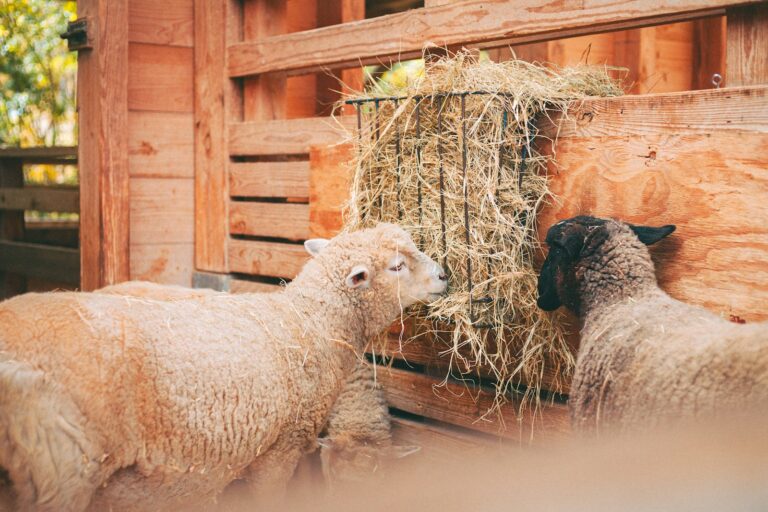
- Sheep and goats chew grain thoroughly and can usually be fed whole sorghum. Whole grain also ferments more slowly, which is gentler on the rumen.
- Camels have traditionally been fed whole or soaked sorghum in Sudan and the Gulf. Many owners soak the grain for several hours to soften it. Cracking also works.
- Cattle swallow a lot of grain without chewing it well. Whole sorghum often passes through undigested, which you can see in the dung. Crack, roll or grind it for cattle.
- Poultry can eat whole or ground sorghum, though it is normally part of a complete formulated feed.
A simple test: if you see a lot of whole kernels in the dung, the animals are not getting full value. Process the grain more, or check whether they are being fed too much at once.
Feeding sorghum to camels
Camels are browsers adapted to poor forage, and their digestive system is not built for big grain meals. Sorghum is a useful energy source for racing camels, camels in milk and animals that need to gain condition, but the amounts should stay moderate.
- Base the ration on forage: grass hay, alfalfa and browse.
- Add grain as a supplement, split over at least two meals.
- Start with a small handful and increase over two to three weeks.
- Watch dung consistency. Loose, sour-smelling dung is a sign of too much grain.
Many camel owners combine sorghum with Sudanese Alfalfa for protein and calcium. Our camel feeding guide gives a full picture of rations for different types of camel. For racing or high-value animals, plan the ration with a camel vet or nutritionist.
Feeding sorghum to sheep, goats and cattle
For ruminants, sorghum works as part of a concentrate fed alongside forage. Typical uses:
- Fattening lambs and kids. Sorghum adds energy for weight gain, often mixed with a protein source and fed with hay. Ahead of Eid, when demand for sheep peaks, many owners raise grain levels to finish animals faster. Do it gradually.
- Breeding ewes and does. Small amounts help condition before mating and in late pregnancy.
- Beef and dairy cattle. Cracked or rolled sorghum can replace part of the maize or barley in a concentrate.
Sorghum is low in calcium and relatively high in phosphorus, like most grains. Male sheep and goats on high-grain diets are at risk of urinary stones if the calcium to phosphorus ratio drops too low. Good forage, especially alfalfa, and a proper mineral supply help keep the balance right.
If you would rather not formulate your own mix, a complete fattening feed such as Nitro Feed already balances energy, protein, vitamins and minerals. See also our guide on the best feed for fattening sheep.
How much sorghum is safe? Avoiding grain overload
The main risk with any starch grain is acidosis, also called grain overload. When a ruminant or camel eats a lot of grain it is not used to, the starch ferments quickly, acid builds up in the rumen and the animal can go off feed, scour, go lame or, in severe cases, die.
To keep sorghum safe:
- Introduce it over two to three weeks, starting at a small amount and increasing every few days.
- Always feed forage alongside grain. Long fibre keeps the rumen working properly.
- Split the daily grain into two or more meals rather than one large one.
- Store grain where animals cannot break in and gorge on it.
- Keep feeding times consistent, especially in summer when animals eat more in the cool of the evening.
As a general guide, grain and concentrate should stay well below the forage share for camels and for maintenance animals. Fattening lambs and cattle on high-grain rations need careful management. A vet or nutritionist should set exact levels for intensive feeding.
One point that often causes confusion: the prussic acid poisoning linked to sorghum comes from young, green or stressed sorghum plants used as forage. Mature, dry sorghum grain does not carry that risk.
Storing sorghum grain in the UAE
Whole sorghum stores well because the kernel is hard and the seed coat is intact. Cracked or ground grain goes stale and attracts insects faster, so only process what you will use within a short time.
- Keep grain dry and shaded, ideally below about 13% moisture.
- Store bags on pallets, away from walls.
- Check regularly for weevils, moths and rodents.
- Throw out mouldy or caked grain. Mouldy grain can carry mycotoxins.
More tips are in our article on how to store animal feed in hot weather.
Frequently asked questions
Is sorghum good for animal feed?
Yes. Sorghum is a widely used energy grain for camels, sheep, goats, cattle and poultry. White, low-tannin sorghum has close to the feeding value of maize and slightly more protein. It needs proper processing for cattle, a slow introduction for all animals and enough forage in the ration to avoid acidosis. It is a supplement to forage, not a replacement for it.
Is sorghum better than barley for sheep?
Neither is clearly better. Barley has a little more protein and fibre. Sorghum has slightly more energy and ferments more slowly, which some owners find gentler on the rumen. Sheep can eat both whole. Many choose based on price and availability, or mix the two. Whichever you use, introduce it gradually and feed it with hay and minerals.
Should I soak sorghum for camels?
Many camel owners soak whole sorghum for several hours before feeding. Soaking softens the hard kernel, which can make it easier to chew and digest. Cracking the grain does a similar job. Use soaked grain the same day, because wet grain can sour or grow mould quickly in UAE heat. Discard any leftovers.
Can cattle eat whole sorghum?
Cattle can eat it, but they digest whole sorghum poorly because they swallow many kernels without chewing them. A large share can pass straight through. Cracking, rolling or grinding the grain lets cattle get far more energy from it. Sheep and goats chew more thoroughly and usually manage whole sorghum well.
Is sorghum grain poisonous to livestock?
Mature, dry sorghum grain is not poisonous. The prussic acid risk associated with sorghum comes from young, wilted or drought-stressed sorghum plants grazed or cut as green forage. The main risk with the grain is overfeeding, which can cause acidosis. Mouldy grain can also carry mycotoxins, so only feed clean, dry sorghum.